
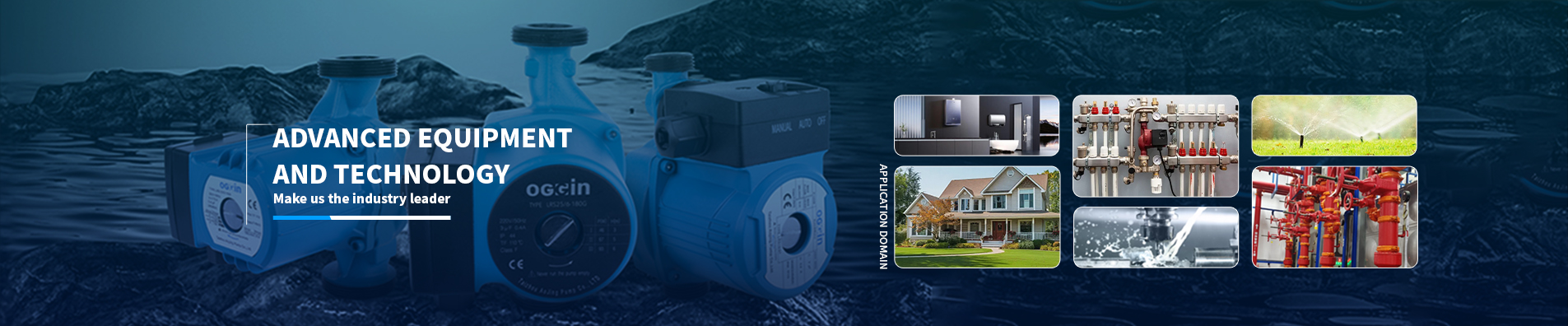
The need for fluid circulation and pressurization is widespread in modern industrial production and civil infrastructure. From the circulation of reactants in chemical production and the transportation of oil products in petroleum refining to the circulation of hot and cold water in building HVAC systems and coolant circulation in the new energy sector, reliable pumping equipment is essential. As a special type of pump, the circulating and booster canned pump, with its unique structural design and operating characteristics, plays a key role in numerous applications with specialized fluid transport requirements. It combines the leak-free advantages of a canned pump with a boosting function, ensuring safe and stable circulation of the conveyed medium while providing the required pressure boost to meet flow and head requirements under various operating conditions. With the continuous advancement of industrial technology and the increasing demands for a better working and living environment, higher requirements are being placed on the performance and reliability of circulating and booster canned pumps. In-depth research on the design principles, applications, and development trends of circulating and booster canned pumps is of great practical significance for optimizing their performance, expanding their application areas, and promoting the development of related industries.
The circulating and booster canned pump operates based on the principles of electromagnetic induction and fluid dynamics. Its core structure consists of a motor and a pump body, tightly integrated into one. When alternating current flows through the motor's stator windings, it generates a rotating magnetic field. The shielding sleeve allows this magnetic field to pass smoothly through the sleeve and act on the rotor, driving its rotation. The rotor and the pump's impeller are fixed to the same shaft, so the rotor's rotation drives the impeller's rotation synchronously. When the impeller rotates at high speed, the blades exert a force on the fluid within the pump chamber, imparting centrifugal force to the fluid. This centrifugal force rapidly propels the fluid from the center of the impeller toward its outer edge, significantly increasing its flow rate and pressure, thereby achieving pressurized fluid delivery. Circulating booster canned motor pumps are typically designed with a recirculation circuit. A portion of the pressurized fluid flows back through a dedicated circulation channel to the pump inlet or motor chamber. This serves to cool the motor, ensuring a stable temperature during long-term operation. Furthermore, the circulating fluid replenishes energy, further improving the pump's overall operating efficiency and stability, enabling continuous circulation and pressurization of the fluid.